Friday, July 13, 2007

Thursday, July 12, 2007

Lam on binh bau cho Vinh Ha Long thanh ky quan thien nhien the gioi


Vịnh Hạ Long nằm trong danh sách đề cử kỳ quan thế giới
Thứ tư, 11/7/2007, 08:15 GMT+7

Sau hôm 7-7, các nhà tổ chức chiến dịch bầu chọn bảy kỳ quan mới đã tiếp tục mở cuộc bình chọn bảy kỳ quan mới của thế giới nhưng lần này là các kỳ quan thiên nhiên.


Từ nay đến tháng 8-2008, ban tổ chức kêu gọi bỏ phiếu cho bảy địa điểm thiên nhiên có phong cảnh đẹp nhất và chưa bị bàn tay con người thay đổi đáng kể.

Để làm điều này, mọi người chỉ cần vào địa chỉ www.natural7wonders.com và liệt kê bảy lựa chọn của mình. Vịnh Hạ Long của Việt Nam cũng là một trong các ví dụ về kỳ quan thiên nhiên được các nhà tổ chức liệt kê trên trang web.

Kết quả sẽ được công bố vào ngày 8-8-2008.

Wednesday, July 11, 2007

Joke of the day

Vì học tiếng anh quá khó với các bà nội trợ. Nhưng một số vẫn cứ kiên quyết học. Và họ học theo cách cứ nhìn vào vật gì thì liên tưởng đến chữ đó. Dưới đây là một ví dụ về cách họ học ngày tháng trong tuần: Nhìn vào cái mâm thì nói "Mâm đây" : Thứ hai (monday). Nhìn vào hũ tiêu và nói "Tiêu đây": là thứ ba (tuesday). Nhìn vào cái chổi và nói "Quét đây": thứ tư (wednesday). Nhìn vào cái thớt nói " Thớt đây": thứ năm (Thursday). Nhìn vào con dao, nói "Phay đây": là thứ sáu (Friday). Nhìn vào hũ rượu rắn của chồng và nói "Xà tửu đây" : Là thứ bảy (Saturday). còn Chủ nhật (Sunday) thì nói "sướng đây". hehe

Thursday, July 5, 2007

Joke of the day

Đêm nay Bác ko ngủ Bác thay bỏ đồ ngủ Bác ra khỏi phòng ngủ Bác đi lại gần tủ Bác thấy trái đu đủ Bác định mời bạn cũ Cùng ăn trái đu đủ Nhưng rồi bác tự nhủ Chia ra ăn sao đủ Mình đâu phải Hạng Vũ Đánh bại được cả lũ Không khéo xịt máu mủ Thế là Bác ko rủ Bác tiến lại gần tủ Bác mở cánh cửa tủ Bác thò tay vào tủ Bác lấy trái đu đủ Bác thấy nó hơi cũ Thì ra nó bằng mủ Quê quá... Bác đi ngủ!

Joke of the day

Bạn bè bảo tôi là thằng cô đơn vì tôi chưa có bạn gái. Nhưng tôi từng có người con gái nguyện cùng tôi đi về nơi tận cùng thế giới : "không trả nợ cho bà,bà thề ôm mi chết chung ." Từng có người con gái cùng tôi hẹn ước đến kiếp sau : "muốn kua chị mày đây hả?Kiếp sau đi kưng ." Từng có người con gái cam nguyện vì tôi mà chết : "Làm bạn gái ông?Tui thà chết còn hơn" -> nghĩ lại thấy mình cũng đào hoa phết

Joke of the day

Kẻng !!! Tan học nữ sinh lớp 12 trường cấp 3 ở Saigòn túa ra cửa làm cho ông thầy phải ra sau cùng. Ông thầy chạy theo kêu đám nữ sinh: " Bóp em nào đây?" Một nữ sinh xinh đẹp chạy lại phía ông thầy và hớt hải la lên: "Bóp em thầy, bóp em thầy, thầy... bóp em!" >>>> Đố biết dzụ dzì đang xảy ra

Tuesday, July 3, 2007

ON THE RIVER OF NINE DRAGONS- 9.9.2004

Part 5 in a series of travelling among former enemies

Thuy, our guide from My Tho ©1997, James A. Clapp

I have a special affection for rivers. No natural earthly feature is more responsible for the emergence of urban civilization than these riparian givers of life to the land. All the first civilizations, and their cities, sprouted on rivers—the Nile, the Tigris and Euphrates, the Yangtse, the Indus, the Irrawaddy. But perhaps no river has played a role in the turbulent histories of more nations than the Mekong, originating in the mountains of Tibet, and descending through southern China, Burma, Laos, Thailand, Cambodia, and Vietnam before spilling into the South China Sea.

Most Americans probably couldn't identify the Mekong, which the Vietnamese call the Song Cuu Long (River of the Nine Dragons) before S.E. Asia got on their maps with the Vietnam war, including most of the Americans who were sent to fight and die there. Three decades ago John Kerry and other Swift Boat fighters plied the Mekong and the tributaries of its vast delta in search of Viet Cong who were so mingled with the local village populations that U.S. and South Vietnamese Army forces engaged in “search and destroy” operations from swift boats and helicopter gun ships that many innocents were killed, and large number of delta farmers fled north to Saigon.

The Mekong delta that I visited from My Tho, the provincial capital of about 90 thousand people, shows little after-effects of the war. The town sits on the northernmost tributary of the Mekong, and from here there are islands that may be visited that are lush with the growing of rice (enough to feed all of Vietnam and still make the country the world's fourth larger exporter of rice), coconut, sugar cane, and many fruits and fish and shrimp. I could not help wonder however whether there were lingering amounts of Agent Orange, the defoliant that was dumped by air on this area to expose the VC. It has returned, thanks to the Mekong, to its verdant lushness, but some American soldiers have claimed negative health effects from the stuff. Still, I saw no kids with antlers or webbed feet.

Thuy, our lovely guide to the nearby island called Tan Long, speaks surprisingly good English, but she is a little rigid, perhaps because the boat company that she works for is owned by the local party cadres. Sue and I are the only two one her boat today and as we head out over the milk chocolate expanse of the river she dutifully fills our heads with statistics and history. But when I ask her questions I am surprised that rather than being an attractive cipher she is quite knowledgeable and confidently and extensively answers to the point where I stop asking questions and offer to answer any she might have about my country. She is hesitant and I prompt her with a compliment about her good English and historical knowledge. Would she like to perhaps attend university in America, I ask. Nine times out of ten in Asia the question elicits a request for a letter of recommendation, a scholarship and room and board, but Thuy demurs. She really only wants to study about her country, she says, which she can best accomplish at a university here, and it becomes difficult for me to imagine her in a silk pastel ao dai , hair blowing in the breeze as she whirls between Saigon's night spots on a bright new Honda motorbike. My question leaves a chauvinistic taste in my mouth.

Tan Long, like the other islands is low and subject to flooding, so it is cut through with canals to assist run-off and lessen flooding. When we take a ride along one of the canals we appreciate the dilemma of the forces in pursuit of the VC. The labyrinth of narrow waterways are lined with high foliage such that one has to all but fall into one to know it is there. The low half-banana boats paddle easily and silently along them with scarcely width for two to pass. The VC could appear and disappear with suddenness in this environment, and it becomes clearer what pushed the defoliation decision.

Not so swift boat ©1997 J.A. Clapp

We make our way past topiary dragons to a modest restaurant for some tea. It is little more than some thin walls and a roof over a tamped dirt floor, and it is difficult to distinguish where the living quarters of the proprietors leave off and the restaurant begins. In a room off the dining room a father sways in a hammock with his young son; in another a young woman squats on a table weaving the traditional conical hats. The dining room itself is a spotless as possible in a place with a mud-packed floor and walls that do not come down to it. I wonder about snakes. A calendar and a poster of a Vietnamese movie star serve as decorative art. There is something placid and timeless about the place. Only the serene but welcoming mother-proprietor is old enough to remember when black-pajammed VC and Americans soldiers made a hell of this place. She, and the Mekong.

Source http://images.google.com/imgres?imgurl=http://homepage.mac.com/yingloon/images/My-Tho-girl-web.jpg&imgrefurl=http://homepage.mac.com/yingloon/DCJSept2004.htm&h=365&w=500&sz=31&hl=en&start=11&sig2=tEKHf94N5om0UXjOvj-bIA&um=1&tbnid=nPHIB3zbMh0ZMM:&tbnh=95&tbnw=130&ei=-pGJRvXFDaiUggORruHzCA&prev=/images%3Fq%3Dmy%2Btho%26svnum%3D10%26um%3D1%26hl%3Den%26rlz%3D1B3GGIC_enJP220JP220

Monday, June 18, 2007

Dieu Van

Cách đây 3 năm có đọc được bài này. Ko nhớ của ai nữa. Nghe nói anh này đã chết. Giờ lại thấy butchi có. Post lên chơi.


Nếu tôi chết, hãy đưa tôi ra biển
Trên quan tài đề hai chữ “ lay out “
Để đại dương nổi hết trận ba đào
Nghe văn tế trải dài trên leaflet….

Đừng than khóc, đừng chơi trò feed back
Để tôi nằm, không một tiếng complain
Nước mắt nào rỏ xuống giữa đêm đen
Lời ai điếu chất đầy vào print ad

Option nào rồi cũng die, cũng chết
Slogan nào thách thức nổi thời gian?
Packaging 6 tấm cháy thành than
Banner lượn giữa trời chiều tê tái….

Idea nào cũng trở về cát bụi
Concept nào rồi cũng hóa ra tro
Ta ngồi đây phất mãi tấm billboard
Job request rơi vào miền vô nghĩa….

Đặt sticker vào cõi lòng nhân thế
Rung wobbler giữa thế giới cuồng phong
Trải poster ra giữa một cánh đồng
Nghe gió đổ giữa đại ngàn hoang dại….

Thảo headline mà lòng buồn vời vợi
Thêm tagline cũng chẳng khá gì hơn
Shelf talker chết đứng giữa khung buồn
Teaser chẳng làm nhân gian sửng sốt

Số phận ta là cơn dông bất chợt
TVC xoay chuyển đến ngàn sau
Ta về đây nghe gió lượn qua cầu
Ôi rách nát story board tơi tả…

Chẳng ai đem đời mình mà mặc cả
Mà dead line vẫn dí sát sau lưng
Một ngày kia nghe bão tố lên đường
Trong quạnh quẽ không một người ngồi brief….

Monday, June 11, 2007

Joke of the day

Johnny wanted to have sex with a girl in his office, but she belonged to
someone else...One day, Johnny got so frustrated that he went up to
her and said, "I'll give you a $100 if you let me
screw you. But the girl said NO.

Johnny said, "I'll be fast. I'll throw the money on
the floor, you bend down, and I'll be finished by the
time you pick it up. "She thought for a moment and said that she would have
to consult her boyfriend... So she called her
boyfriend and told him the story.

Her boyfriend says, "Ask him for $200, pick up the
money very fast, he won't even be able to get his
pants down."


So she agrees and accepts the proposal. Half an hour
goes by, and the boyfriend is waiting for his
girlfriend to call.

Finally, after 45 minutes, the boyfriend calls and
asks what happened.


She responded, "The bastard used coins!"

Friday, June 8, 2007

Delta noodles in Saigon


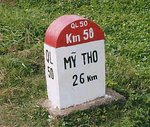
Finally, finally, finally, shoved my nose inside this joint at the corner of Nguyen Dinh Chieu and Pham Ngoc Thach in District 1, Saigon. I'm mad for a bowl of Hu Tieu - noodles, pork, beansprouts, hedgrerow and possibly the loveliest, sweet pork broth in all of southern Vietnam. However... this fair shack doles out Hu Tieu My Tho. My Tho is a hicktown an hour or two south of Saigon in Tien Giang province in the Mekong Delta. This plastic kiddie chair outfit is the only place selling My Tho-tinged Hu Tieu that I've yet to stumble into in Saigon. Just how different is it from that other corkin' Hu Tieu with a sweetnose?

Slapbang in the centre of this bowl is a stonking great knuckle of pork, paddling around in pork stock, surrounded by spring onions and sitting on a foundation of vermicelli noodles and thick cut, fat-still-on pork strips. Along for the trip are a side of bollock burning wee red chillies - easy with these meanies - and a plate of beansprouts, lettuce and chinese celery. For them's that's fancy there's also a bottle of nuoc cham to glug from in the condiments rack.

There's no sweetness. This pork stock's as straight as the Fosse Way, but it's rammed to the gills with meatpower. Throw in a few rip ups from the sideplate and you're off. Tackling the knuckle is a bit of an art, one I have yet to learn and can't be arsed with. I tend to chip of the tender morsels with the choppies and gnaw on the rest. It's not stylish, but it gets the job done. And it is tender, it's been bubbling away in a vast vat since early morning so it jolly well should be.

This is good stuff, although I have a very strong preference for the sweeter, more snazzy version which I think is known as Hu Tieu Nam Vang, but I could be wrong, it might just simply be Hu Tieu. Whatever. That's the fella I'll continue plumping for. Having said that, if I'm passing this place again I could be tempted to pop in for a quick dust with a knuckle or two. This place serves Com binh dan (literally 'food for workers') at lunchtime and, if this visit is anything to go by, it is exceedingly popular. A bowl of Hu Tieu will set you back a stiff 12,000 dong with a free Tra da thrown in. More Hu Tieu here and here's my fave and lastly, more photos from this restaurant.

Hu Tieu Mi

This is the kitchen of a no name Hu Tieu restaurant at the corner of 14 Ky Dong street in Saigon's District 3. I've passed it many a time. I took the photo you can see above months ago, but today is the first time I've bothered pulling up a streetside stool for lunch. We've covered the pork noodle Hu Tieu soup before, most enjoyably here. It's a southern soup, normally slightly sweet. This joint serves six variations on the basic theme. I'm dining here because it's always packed at lunchtime. A good sign.

I order a Hu Tieu Mi for 9,000VD. Mi is a kinda noodle. Yellow, thin, cylindrical, firm and to my mind it's the tastiest of all the noodles in Saigon. Here's a closeup. This rendition comes with a separate small bowl of blanched beansprouts. In the soup you'll find, tender, thin strips of boiled pork, spring onions, some minced pork and deep fried shallots. Here's the construction bay. Dunno 'bout you, but that looks like fine stuff above.

Dining here puts you right on the street. The walls are grimey, peeling paint, ancient advertisements are stuck at odd angles, half hanging, half advertising. It has that thoroughly half arsed, "Sod the decor, let's scoff" look about it. i.e. it's my kinda place. Having said that, check out the quai breadsticks just visible in the snap above - covered in cellophane. Now there's hygiene :) This is good Hu Tieu. The meat is excellent as are the Mi. However, the stock's not sweet enough. Hu Tieu should have a thin, but very noticeable trace of sugar coming through the stock. I'm not getting that here. Having said that, I am lovin' it. The other difference with previous Hu Tieu is the condiment bowl pictured below.

If you're an idiot, you'll fumble around in here, add willy-nilly, enjoy your lunch, have a cuppa tea, go back to your office, sit down at your computer, rub your left eye and then scream agonisingly as your eye bleeds 900 degrees of chilli heat from its swollen socket. With the benefit of hindsight, albeit blind in one eye hindsight, it's probably more sensible to wash your hands after lunch. Read the previous post for more on this distinctive southern Vietnamese noodle soup. This is a decent noodle joint. Worth trying. If you're in the vicinity I also recommend you take the two minute stroll to this very good snail restaurant. Meanwhile, can anyone tell me what Xiu Mai means? It's on the menu and I forgot to ask.

Tip off: Hu Tieu

One Hanoian, One Saigonite. No consulting. Both agree. There be some quality Hu tieu there. Paper, pen, local knowledge. Marvellous.

Chemical soup

We've had bad and very good Hu tieu before and now we have a MSG overloaded version on the streets of District 1. I find a mobile seller of this pork noodle soup outside 15B-5 Le Thanh Ton Street in District 1. She says she sells from here mid-morning every day. She's quite the friendly seller who mistakes me for another Ong tay noodle muncher. Oh well we all look the same, ehh? I pull up a pew next to the orange seller who's busy gobbling back a 5,000VD mid-morning bite and watch as my take away order is put together.

The difference from previous Hu tieu and this one is that this flogger uses a pork sliver/pig's blood carnivorous combo. No liver, no prawns and thicker noodles. Oh and there's that MSG hit. I always know I've had way too much of that when I get a machine gun buzz down my spine and feel a bit off-kilter for the rest of the day. It's quite the chemical thrill, but not for everday consumption. More snaps from her stall at this tagged photostream. Here's a recipe for Hu tiu or Hu tieu whichever spelling takes your fancy.

Hu hit

This morning I was supposed to meet ex-CNN reporter, North Korea expert and Global Voices Online blogmeister Rebecca MacKinnon. She's here, I think, to learn how the media in Vietnam is or is not developing. And to talk about blogging. She had to split town early and instead of eating with me, she had the delights of a Vietnam Airlines sandwich to contend with on her way back up to Hanoi. When figuring out where to take Rebecca, I wasn't sure just how 'street' she would be prepared to go. So, erring on the safe side I chose to go 'very very' street. Let's see what she missed.

I've almost ingested and blogged from every stall down at the local market now. However, there are two soups I've yet to 'go live' on and they both reside up this back passage which runs off one side of the main market. As is usual on local markets, there are no signs telling you what's being sold or how much it'll set you back.

I only know this is a Hu tieu stall because... well... I'm very wise. Also I had this same dish two days ago as a 'home delivery'. The last time I blogged Hu tieu it was a bit of a District 10 disaster. That joint has since closed. However, I was so impressed with my 7,000VD home delivery and surprised that I'd never stopped by before that I decide to visit the stall in person this morning.

Hu tieu is a sweet noodle soup made from pork stock with a few small prawns, liver, kidney, pork slivers, he (a chive-alike) and beansprouts. It comes with the white noodles you can see above, but there is a Mi (yellow noodle) variant called Hu tieu mi nam vang. Side note, if you want really decent Mi, head to Mi Chu Tac on Ky Dong street.

I'm going white noodle this morning. The chef revives them in the side stock pot before shunting them bowlwards. However, being Rebecca-less and with the toad in tow, I decide to grab a mang di ve (takeaway) and bank this baby for lunchtime. So, in what is quite possibly definitely a first for this blog. What you are seeing has yet to enter my digestive tract. However, like I said, I had a very successful meeting with this beast two days previously and I feel confident I'm in for a carbon copy performance.

It's blisteringly good broth, not in the sense that it'll actually give you blisters of the puss spewing swollen variety, I don't think it will, well I didn't get any, but that's not to say you couldn't get them... I digress. If Rebecca had come I'm fairly certain she would have said something like, "This soup rocks. My buds'd love this shit." which in village English roughly translates as, "Oh that IS nice. I must tell everyone at the knitting circle to pop along for a post-knit nibble next week."

I don't know much, but what I do know is I've got a blindin' soup for lunch while Rebecca could well still be recovering from airline sarnie hell. Or did she go Business class?? Hmmm? Bloggers in Business class, that could never happen. Could it?

Soup slouch

cmtt.jpg

Superb noodle soups abound in Saigon, you have to try hard to find a REALLY bad one. The soup kitchen I nipped into on this occasion is Thanh Phat at 258 Cach Mang Thang Tam Street - it's on the other side of that traffic nightmare above. This canteen - not quite a restaurant but no shack either - is your common or garden Saigon eatery. Cheap grub for the masses on the move - all metal tables, food in a glass display case out front, neon heavy lighting, big sign advertising the house specialities and pyjama clad cooks. No deviation from standard Vietnamese so far.

cmtt-hu-tieu-sign.jpg

One steaming vat of stock does all 5 soup dishes here; Hu tiu (sliced pork, prawn, liver, thin white noodles and a side of veggies. Sometimes spelt Hu Tieu) Mi Nam Vang (much the same ingredients, with a thin, yellow 'Mi' noodle), Banh Canh (same ingredients again, but a thicker fresh noodle) Hoanh Thanh (Won ton noodle soup) and Bun Moc (have had it, but can't remember what it is at the minute - think it's the same with a big pork knuckle inside). They also serve a Chao (rice porridge) in this case Chao Thap Cam which is basically an animal innard porridge - tasty.

cmtt-hu-tieu-noodles2.jpg

I ordered the Hu Tiu and the Banh Canh to take away, costs 10,000VD per soup and an extra 1,000VD a dish for bagging up the bowls and veggies to take home - very handy. Even though the Banh Canh and the Hu Tiu are exactly the same, except for the type of noodle, it's the Hu Tiu that comes with the veggies (bean sprouts, lettuce, a type of celery leaf and half a lemon). Not sure why there is this veggie-discrimination, but it's never hindered the spirit of sharing and giving at pieman towers.

cmtt-banh-canh-noodles.jpg

So, on to the tasting notes... Sorry, but can't escape the fact that, it's a bland broth, not awful, just - not exciting.

cmmt-hu-tieu-banh-canh.jpg

Tired, grey morsels of liver, stingy on the prawns (1 per bowl...), the pork slivers were fine, but as ever it's the soup that bonds the whole and if that's messin' with mediocrity, you're just eating without enjoyment. Hu Tiu and Banh Canh, on this take, are probably not culinary classics in the same vain as Vietnam's brothbustin hits Mi Quang and Bun Rieu - much more of which blogging up tres soon. There's just not enough goin' on in there. Or perhaps this canteen just isn't a good example. The joint was chosen at random. In Saigon such random bites often throw up edible ecstasy, but not tonight. I'll keep an eye out for more, and hopefully better, Hu Tiu and Banh Canh around town. I want to like these dishes.

Friday, May 25, 2007

Dễ và Khó


Dễ là khi bạn có một chỗ trong sổ địa chỉ của một người, nhưng khó là khi bạn tìm được một chỗ trong trái tim của người đó.
Dễ là khi đánh giá lỗi lầm của người khác, nhưng khó là khi nhận ra sai lầm của chính mình.
Dễ là khi nói mà không suy nghĩ, nhưng khó là khi biết kiểm soát những lời nói của mình.
Dễ là khi làm tổn thương một người mà bạn yêu thương, nhưng khó là khi hàn gắn vết thương đó. Dễ là khi tha thứ cho người khác, nhưng khó là khi làm cho người khác tha thứ cho mình.
Dễ là khi đặt ra các nguyên tắc, nhưng khó là khi làm theo chúng.
Dễ là khi nằm mơ hàng đêm, nhưng khó là khi chiến đấu vì một ước mơ.
Dễ là khi thể hiện chiến thắng, nhưng khó là khi nhìn nhận một thất bại.
Dễ là khi vấp phải một hòn đá và ngã, nhưng khó là khi đứng dậy và đi tiếp.
Dễ là khi hứa một điều với ai đó, nhưng khó là khi hoàn thành lời hứa đó.
Dễ là khi chúng ta nói rằng chúng ta yêu thương, nhưng khó là khi làm cho người khác cảm thấy như thế hàng ngày.
Dễ là khi phê bình người khác, nhưng khó là khi cải thiện chính bản thân mình.
Dễ là khi để xảy ra sai lầm, nhưng khó là khi học từ những sai lầm đó.
Dễ là khi buồn bực vì một điều gì đó mất đi, nhưng khó là khi quan tâm đủ đến điều đó để đừng làm mất.
Dễ là khi nghĩ về một việc, nhưng khó là khi ngừng suy nghĩ và bắt đầu hành động.
Dễ là khi nghĩ xấu về người khác, nhưng khó là khi cho họ niềm tin.
Dễ là khi nhận, nhưng khó là khi cho.
Dễ là khi đọc những điều này, nhưng khó là khi bạn thực hiện nó. Nếu cơ hội mãi không gõ cửa, bạn phải xem mình đã xây một cánh cửa chưa đã. ....

3 điều giá trị

* Ba điều trong đời một khi đã đi qua không thể lấy lại được:
- Thời gian
- Lời nói
- Cơ hội
* Ba điều trong đời không được đánh mất:
- Sự thanh thản
- Hy vọng
- Lòng trung thực
* Ba thứ có giá trị nhất trong đời:
- Tình yêu
- Lòng tự tin
- Bạn bè
* Ba thứ trong đời không bao giờ bền vững được:
- Giấc mơ
- Thành công
- Tài sản
* Ba điều làm nên giá trị một con người:
- Siêng năng
- Chân thành
- Thành đạt
* Ba điều trong đời làm hỏng một con người:
- Rượu
- Lòng tự cao.
- Sự giận dữ.
(sưu tầm)

Thursday, May 24, 2007

Joke of The Day

Tục xưa, tên xấu thì dễ nuôi. Nhà nọ có 3 người con trai được đặt tên là Cút, Cu và Ðớp. Một hôm, ông bố đi vắng thì có ông bạn đến chơi. Người vợ thay mặt chồng tiếp đón ân cân, người bạn cũng vui lắm. Ðến bữa än, người vợ bảo thằng út :
_Dọn cơm cho bác , Ðớp!
Người bạn hơi phật lòng, ăn qua loa vài chén rôi đứng dây. Người vợ bảo đứa thứ hai :
_ Múc nước cho bác rửa, Cu!
Lần này ông bạn giận tím mặt, liền chào ra về. Người vợ ngỡ người ra, không hiểu làm sao cả, bảo thàng con lớn :
_Dắt xe cho bác. Cút <----pó tay với hai vợ chồng nhà này lun

Wednesday, May 23, 2007

Hula Dancing


Hom truoc minh bay tu VN ve Nhat. Tren chuyen bay minh co xem phim ve Hawaii. Minh moi hieu duoc meaning of hula dancing movement. Thoi post bai nay cho nhung ai quan tam ve hawaii dancing nhe.

Hula dancing, a form of dancing native to Hawaii, provides entertainment but has its roots in ancient ritual. The purpose of Hula dancing is to convey meaning through movement. Hula dancing intertwines the performers with the spirit of the universe by unifying their existence with nature. Even if you fail to experience a meditative quality while performing the Hula, you can still learn a basic foundation to enjoy this art form.

This article will address three basic hula steps. You will also be presented with two basic hand movements and instructions for combining the hand movements and basic steps. Hula dancing is a complex art form, and there are many hand motions used to signify aspects of nature. One article simply cannot cover the complexity of Hula dancing and the beauty of this ancient tradition. If you master the following steps and hand motions, you will have a basic foundation from which to build and become a great Hula dancer.

Basic Steps in Hula Dance

Kaholo Step:

  1. Begin standing upright with your feet together, toes pointing forward, and knees slightly bent.

  2. Move your right foot to the right a few inches. Essentially, take a step sideways to the right.

  3. Bring your left foot over to meet your right foot.

  4. Repeat Steps 2 and 3.

  5. Now, move your left foot to the left.

  6. Step with your right foot and place it next to your left foot.

  7. Repeat Steps 5 and 6.

  8. Repeat both Steps 2 and 3 twice.

  9. Repeat both Steps 5 and 6 twice.

  10. Repeat Step 8.

  11. Repeat Step 9.

  12. Steps 10 and 11 can be repeated through the entire length of one Hula song.

Ka’o Step (Sway Step):

  1. Begin just as you did for the Kaholo step. Stand upright with your feet touching and toes pointing forward. Remember to bend your knees slightly.

  2. Step your right foot to the right. Your legs will be shoulder width apart.

  3. Bring your left foot up and in, pulling your heel off the ground with your toes pointing slightly left. The toes of your left foot will be at a 45-degree angle to the toes of your right foot. The heel of your left foot will be touching your right ankle.

  4. Step to the left with your toes pointing forward. Your legs will be shoulder width apart. Pull your right foot up and in, bringing your right heel off the ground. The toes of your right foot will be at a 45-degree angle to the toes of your left foot. The heel of your right foot will be touching your left ankle.

Ami Step (Including hand motions):

  1. Begin with your feet together, toes pointing forward, and knees slightly bent.

  2. Place your arms overhead almost in a touchdown motion. Your arms will form a letter "U." Your palms will be facing each other, and your elbows will be slightly bent rather than locked out.

  3. Count 1 and rotate or roll your waist and hips clockwise. Your hands will be in the initial position described in Step 2. Your feet should be touching the ground and will stay there for the remainder of this step.

  4. Count 2 and move your waist and hips again in a clockwise circle. Bring your arms down so that your palms are at shoulder height.

  5. Count 3 and move your waist and hips clockwise again. Bring your arms down with your elbows pointing backward. Your hands will be at waist level and your palms will face down.

  6. Count 4 and move your waist and hips clockwise again. Move your hands down so that they are at your sides, still with your palms facing down. Keep your elbows slightly bent.

Basic Hand Motions in Hula Dance

Hula Motion:

  1. Place your arms out to your sides at shoulder height with your palms facing down. Bend your left arm in halfway so that your fingertips are now directly in front of your breastbone. Your left hand will be just in front of your body but not touching. The tips of your left fingers will be pointing towards the right.

  2. Now reverse your arms. Place your left arm straight out to the side at shoulder height with your palm facing down. Bend your right arm in so that your fingertips are again at your breastbone. The tips of your right fingers will be pointing towards the left.

Coconut Tree Motion (Right Side):

  1. Begin with your left and right arms at shoulder height stretched out in front of you.

    • Bend your left elbow and bring your hand towards your body until your lower arm is perpendicular to your upper arm. The fingertips of your left arm will be touching the elbow of your right arm. When viewed from the front, your arms will be forming a letter “P."

    • Now bend your right elbow and raise your right lower arm until your fingers are pointing upward and your right and left arms form an "L." Your right palm should be facing the left.
  2. Keep your right arm straight but sway your hand towards the left until you are just short of a 45-degree angle.

  3. Slowly sway your right arm back to the initial upright position.

The Coconut Tree Motion can be performed on the left side also in a Hula dance. Simply reverse the initial position and start with you right fingers touching your left elbow and your left lower arm pointing upward. Sway your left arm to the right then back to the initial position.

The following instructions will show you how to combine a basic step with the Hula motion arm movements.

Combining Kaholo Step with Hula Motion:

  1. Begin Step 1 of the Kaholo step directions.

  2. Perform Step 2 of the Kaholo step directions while performing Step 1 of the Hula motion directions.

  3. Perform Steps 3 and 4 of the Kaholo step directions while still maintaining your arms in Step 1 of the Hula motion directions.

  4. Begin Step 5 of the Kaholo step directions at the same time you begin Step 2 of the Hula motion directions.

  5. Perform Steps 6 and 7 while maintaining your arms in Step 2 of the Hula motion directions.

  6. Begin Step 8 of the Kaholo step directions while performing Step 1 of the Hula motion.

  7. Begin Step 9 of the Kaholo step directions while performing Step 2 of the Hula motion.

  8. Repeat Step 6 of this set of directions.

  9. Repeat Step 7 of this set of directions.

  10. Steps 8 and 9 of this set of directions can be performed throughout the entire length of one song.

Combining the Ka’o Step and Coconut Tree Motion:

  1. Begin in Step 1 of the Ka’o step with your arms in Step 1 of the Coconut Tree motion.

  2. Perform Step 2 of the Ka’o step with your arms still in Step 1 of the Coconut Tree motion.

  3. Perform Step 3 of the Ka’o step with your performing Step 2 of the Coconut Tree motion.

  4. Perform Step 4 of the Ka’o step with your hands returning to their initial position, Step 1 of the Coconut Tree motion.

  5. You can repeat Steps 1 through 4 above as many times as you like to the song of your choice.

Even if you never visit Hawaii, you can enjoy Hula dancing for its rich cultural meaning and the unique form of expression and movement that it is.

Resource http://www.howtodothings.com/hobbies/a3667-how-to-hula-dance.html

Friday, May 11, 2007

Joke of the day

Ban giám khảo của cuộc thi Phụ nữ thế kỷ 21 có một câu hỏi dành cho thí sinh: "Theo em, người đàn ông của thế kỷ 21 phải là người như thế nào?: Thí sinh - ca sĩ Mai Khôi xinh đẹp bèn thỏ thẻ hỏi: "Thưa giám khảo, em có được phép nói đùa không ạ?" Giám khảo hào hứng: "Em cứ nói đùa thoải mái!" Thí sinh bẽn lẽn trả lời: "Dạ! Theo em, người đàn ông của thế kỷ 21 là phải "có chỗ đứng" và… "cứng chỗ đó!"

Lang xet

Tâm tư tàn tạ tình tan tác. Man mác mênh mông mãi mộng mơ. Đau đớn đưa đẩy đời đơn độc. Thao thức thẹn thùng thấy thảm thương. Vội vàng, vô vọng vì vương vấn. Lả lơi, lành lạnh lng lẻ loi. Canh cánh cồn cào càng côi cút. Mệt mỏi mong manh mãi một mình.

Wednesday, May 9, 2007

Bản chất của thành công

Đã bao giờ bạn tự hỏi thành công là gì mà bao kẻ bỏ cả cuộc đời mình theo đuổi? Phải chăng đó là kết quả hoàn hảo trong công việc, sự chính xác đến từng chi tiết? Hay đó là cách nói khác của từ thành đạt, nghĩa là có được một cuộc sống giàu sang, được mọi người nể phục? Vậy thì bạn hãy dành chút thời gian để lặng mình suy ngẫm. Cuộc sống sẽ chỉ cho bạn có những người đạt được thành công theo một cách giản dị đến bất ngờ.
Thành công là khi bố và con trai có dũng khí bước vào bếp, nấu những món ăn mẹ thích nhân ngày 8-3. Món canh có thể hơi mặn, món cá sốt đáng lẽ phải có màu đỏ sậm thì lại ngả sang màu… đen cháy. Nhưng nhìn mâm cơm, mẹ vẫn cười. Bởi vì hai bố con không thể thành công trên “chiến trường” bếp núc, nhưng lại thành công khi tặng mẹ “đoá hồng” của tình yêu. Một món quà ý nghĩa hơn cả những món quà quý giá, hạnh phúc ấy long lanh in trong mắt mẹ.
Thành công còn là câu chuyện về một cậu bé bị dị tật ở chân, không bao giờ đi lại bình thường được. Từ nhỏ cậu đã nuôi ước mơ trở thành cầu thủ bóng đá. Sau bao nỗ lực khổ luyện, cậu bé trở thành cầu thủ dự bị trong một đội bóng nhỏ, và chưa bao giờ được chính thức ra sân. Nhưng đó không phải là thất bại. Trái lại, thành công đã nở hoa khi cậu bé năm xưa, với bao nghị lực và quyết tâm, đã chiến thắng hoàn cảnh để theo đuổi ước mơ từ ngày thơ bé. Thành công ấy, liệu có mấy người đạt được?
Sau mỗi mùa thi đại học, có bao “sĩ tử” buồn rầu khi biết mình trở thành “tử sĩ”. Hai bảy điểm, cao thật đấy. Nhưng cao mà làm gì khi NV1 lấy tới hai bảy phẩy năm? Đó thật ra không phải là thất bại, chỉ là khi thành công - bị - trì - hoãn mà thôi. Cuộc sống vẫn chào đón họ với NV2, NV3. Quan trọng là họ đã nỗ lực hết sức để khẳng định mình. Đó là ý nghĩa vẹn nguyên của các kỳ thi, và cũng là bản chất của thành công.
Ngày còn nhỏ, tôi đã được đọc một câu chuyện rất xúc động. Truyện kể về một cậu bé nghèo với bài văn tả lại mẹ - người phụ nữ đã che chở cuộc đời em. Cậu bé viết về một người mẹ với mái tóc pha sương, với đôi bàn tay ram ráp nhăn nheo nhưng dịu hiền và ấm áp. Cậu kết luận rằng: bà ngoại là người mẹ - người phụ nữ đã nâng đỡ em trong suốt hành trình của cuộc đời. Bài văn lạc đề, phải về nhà viết lại. Nhưng đó mới chính là một tác phẩm thành công, bởi ở đó chất chứa tình yêu thương của đứa cháu mồ côi dành cho bà ngoại. Liệu có thành công nào, tình cảm nào thiêng liêng hơn thế?
Nhiều năm trước, báo chí từng vinh danh một cậu học trò nghèo thi đậu đại học với vị trí thủ khoa. Đối với cậu, đó là một thành công lớn. Nhưng có một thành công khác, lặng thầm mà lớn lao, đó là chiến thắng của một người cha gần 20 năm trời đạp xích lô nuôi con ăn học. Bao niềm tin và hi vọng hiện lên trên gương mặt vốn đã chịu nhiều khắc khổ. Và ngày con trai đậu đại học cũng là ngày tốt nghiệp khoá - học - của - một - người - cha.
Tôi biết có một nữ sinh tốt nghiệp đại học với tấm bằng loại ưu gần hai mươi năm trước. Với tài năng của mình, cô có thể gặt hái thành công trên con đường sự nghiệp và danh vọng. Nhưng cô sinh viên năm ấy đã chấp nhận hi sinh những cơ hội của đời mình để trở thành một người vợ đảm đang, một người mẹ dịu hiền của hai cô công chúa nhỏ.
Cho tới bây giờ, khi đã là một phụ nữ trung niên, Người vẫn nói với tôi rằng: “Chăm sóc bố và hai con chu đáo, đối với mẹ đã là một thành công lớn”. Mỗi khi nghe câu nói ấy, tôi lại rơi nước mắt. Gia đình là hạnh phúc, là thành quả đẹp đẽ của đời mẹ, và chúng tôi phải cảm ơn mẹ vì điều đó.
Con người luôn khát khao thành công, nhưng mù quáng theo đuổi thành công thì thật là vô nghĩa. Bạn muốn mình giàu có, muốn trở thành tỷ phú như Bill Gates? Vậy thì hãy gấp đồng tiền một cách cẩn thận rồi trao nó cho bà cụ ăn xin bên đường. Với việc làm đẹp đẽ ấy, bạn sẽ cho mọi người hiểu được bạn không chỉ giàu có về vật chất mà còn giàu có tâm hồn. Khi đó, bạn đã thực sự thành công.
Cũng có khi bạn ước mơ thành công sẽ đến với mình như đến với Abramovich - ông chủ của đội bóng toàn những ngôi sao? Thành công chẳng ở đâu xa, chỉ cần bạn dành thời gian chăm sóc cho “đội bóng” của gia đình bạn. Ở đó, bạn nhận được tình yêu thương vô bờ bến, thứ mà Abramovich không nhận lại được từ những cầu thủ của ông ta. Thành công đến với mọi người một cách giản dị và ngọt ngào như thế!
Bạn được sinh ra, đó là một thành công vĩ đại của cha và mẹ. Trách nhiệm của bạn là phải gìn giữ cho vẻ đẹp hoàn thiện của thành công ấy. Đừng bao giờ ủ ê nghĩ rằng cuộc sống là một chuỗi của thất bại, bởi như một giáo sư người Anh từng nói: “Cuộc sống này không có thất bại, có chăng là cách chúng ta nhìn nhận mọi việc mà thôi”.
Còn đối với tôi, thành công là khi ai đó đọc được bài viết nhỏ này. Có thể sẽ chẳng được điểm cao, nhưng gửi gắm được những suy nghĩ của mình vào trang viết, với tôi, đó là một thành công.
HÀ MINH NGỌC

Sự lựa chọn

Cuộc sống thật công bằng vì nó luôn cho chúng ta nhiều sự lựa chọn:

Hama

Hạnh phúc hoặc đau khổ
Vui hoặc buồn
Cười hoặc khóc
Cho hoặc nhận
Theo đuổi hoặc từ bỏ
Tin tưởng hoặc nghi ngờ
Phải hoặc trái
Trắng hoặc đen...

Giả sử tay trái của bạn đang cầm một vật sắp sửa rớt khỏi tay bạn. Còn tay phải của bạn thì đang với đến một đồ vật ở tít trên cao, nơi mà chắc chắn rằng bạn chẳng bao giờ với tới thì bạn sẽ quyết định ra sao? Bạn vẫn sẽ cố với lấy cái ở trên cao mặc cho cái bạn đang cầm giữ sắp rớt. Hay bạn sẽ từ bỏ cái kia và dùng hai tay nắm chặt lấy cái sắp rớt khỏi tay bạn? Trong cuộc sống có những thứ không thể cưỡng cầu. Tại sao cứ phải tập trung vào những sự việc ngoài tầm kiểm soát của bạn mà quên đi rằng vẫn còn rất nhiều việc mà bạn có thể làm cho thế giới này? Tất cả đều phụ thuộc vào sự lựa chọn của bạn.

Mỗi chúng ta đi trên những con đường riêng biệt thích hợp với chỉ duy nhất bản thân mình. Điều quan trọng là hãy tập trung vào con đường mình đi hơn là cố gắng đi theo con đường của người khác.

Có những lựa chọn là đúng cũng có những lựa chọn là sai. Nhưng đúng hay sai không thành vấn đề, điều quan trọng là bạn phải lựa chọn. Bởi vì nếu bạn không thể lựa chọn thì bạn sẽ mãi không thoát ra khỏi vấn đề đang bao vây bạn. Và vì thế sẽ không thể xuất hiện những lựa chọn tiếp theo. Nếu bạn có sự lựa chọn đúng đắn thì không có gì để nói, nhưng giả sử bạn đã lựa chọn sai. Cuộc sống sẽ cho bạn tiếp hai sự lựa chọn mới: học hỏi để rút kinh nghiệm hoặc tiếp tục phạm sai lầm.

Nếu bạn chọn cái thứ nhất thì tôi cam đoan rằng bạn khá thông minh để không chọn sai lần nữa phải không? Còn nếu chọn cái thứ hai thì...bạn lại tiếp tục sai lầm và lại tiếp tục chọn lựa. Bạn thấy đấy, cuộc sống là sự chọn lựa. Được hay không được là tùy nơi bạn. Có thể chính bạn sẽ thực hiện việc chọn lựa hay người khác sẽ chọn lựa cho bạn, nhưng có một điều bạn phải luôn luôn ghi nhớ. Đó chính là dù gì đi nữa thì bạn cũng phải có sự lựa chọn: cái này hoặc cái kia.

Sunday, May 6, 2007

Joke of the day- HỌC TRÒ XUẤT SẮC

Học trò xuất sắc!! Ngọc năm nay 6 tuổi học trường tiểu học, lớp 5. Học được một tuần thì bé Ngọc không chịu làm bài vở nữa. Cô Thảo bèn hỏi nguyên nhân tại sao thì bé Thủy ngồi cạnh bé Ngọc trả lời rằng do chương trình học quá thấp so với trình độ của Ngọc. Mấy hôm sau, bé Ngọc xin cô cho lên học bậc trung học. Cô Thảo dẫn bé Ngọc lên văn phòng ông hiệu trưởng, trình bày đầu đuôi câu chuyện. Ông hiệu trưởng bán tín bán nghi, bàn với cô Thảo là ông sẽ hỏi bé Ngọc một số câu hỏi về khoa học còn cô Thảo sẽ hỏi Ngọc về kiến thức tổng quát, nếu bé Ngọc trả lời đúng ông sẽ cho bé nhảy lớp. Ông hiệu trưởng và cô
Thảo bắt đầu hỏi Ngọc:
- Hiệu trưởng: 25 lần 25 là bao nhiêu?
- Bé Ngọc : Dạ là 625
- Hiệu trưởng: Công thức tính diện tích vòng tròn?
- Bé Ngọc : Dạ là bình phương bán kính nhân Pi
- Hiệu trưởng: Nước bốc thành hơi khi nào?
- Bé Ngọc : Dạ khi nước sôi ở 100 độ C
............................
Sau 1 tiếng "tra tấn", câu nào bé Ngọc cũng đáp đúng hết, ông hiệu trưởng rất hài lòng về kiến thức khoa học của bé và giao cho cô Thảo hỏi về kiến thức tổng quát :
- Cô Thảo : Con gì càng lớn càng nhỏ?
Ông hiệu trưởng hết hồn........nhưng bé Ngọc trả lời ngay: "Dạ là con cua nó có càng lớn và càng nhỏ".
- Cô Thảo : Cái gì trong quần em có mà cô không có?
Ông hiệu trưởng xanh cả mặt.
- Bé Ngọc : Dạ là 2 cái túi quần
- Cô Thảo : Ở nơi đâu lông của đàn bà quăn nhiều nhất?
Ông hiệu trưởng run lên.
- Bé Ngọc : Dạ ở Phi Châu
- Cô Thảo : Cái gì cô có ở giữa 2 chân của cô?
Ông hiệu trưởng chết điếng người.
- Bé Ngọc : Dạ là cái đầu gối
- Cô Thảo : Cái gì trong người của cô lúc nào cũng ẩm ướt ?
Ông hiệu trưởng hóc mồm ra.
- Bé Ngọc : Dạ là cái lưỡi
- Cô Thảo : Cái gì của cô còn nhỏ khi cô chưa có chồng và rộng lớn ra
khi cô lập gia đình?
Ông hiệu trưởng ra dấu không cho bé Ngọc trả lời nhưng bé Ngọc đáp
ngay: "Dạ, là cái giường ngủ ạ".
- Cô Thảo tiếp : Cái gì mềm mềm nhưng khi vào tay cô một hồi thì cứng ra?
Ông hiệu trưởng không dám nhìn cô Thảo
- Bé Ngọc : Dạ là dầu sơn móng tay
- Cô Thảo : Cái gì dài dài như trái chuối, cô cầm một lúc nó chảy nước
ra?
Ông hiệu trưởng gần xỉu.
- Bé Ngọc : Dạ là cây kem ạ
Ông hiệu trưởng đổ mồ hôi hột ra dấu bảo cô Thảo đừng hỏi nữa và nói
với bé Ngọc : - Thầy cho con lên thẳng đại học bởi vì con là thần đồng. Nãy giờ thầy không trả lời đúng 1 câu nào hết !!